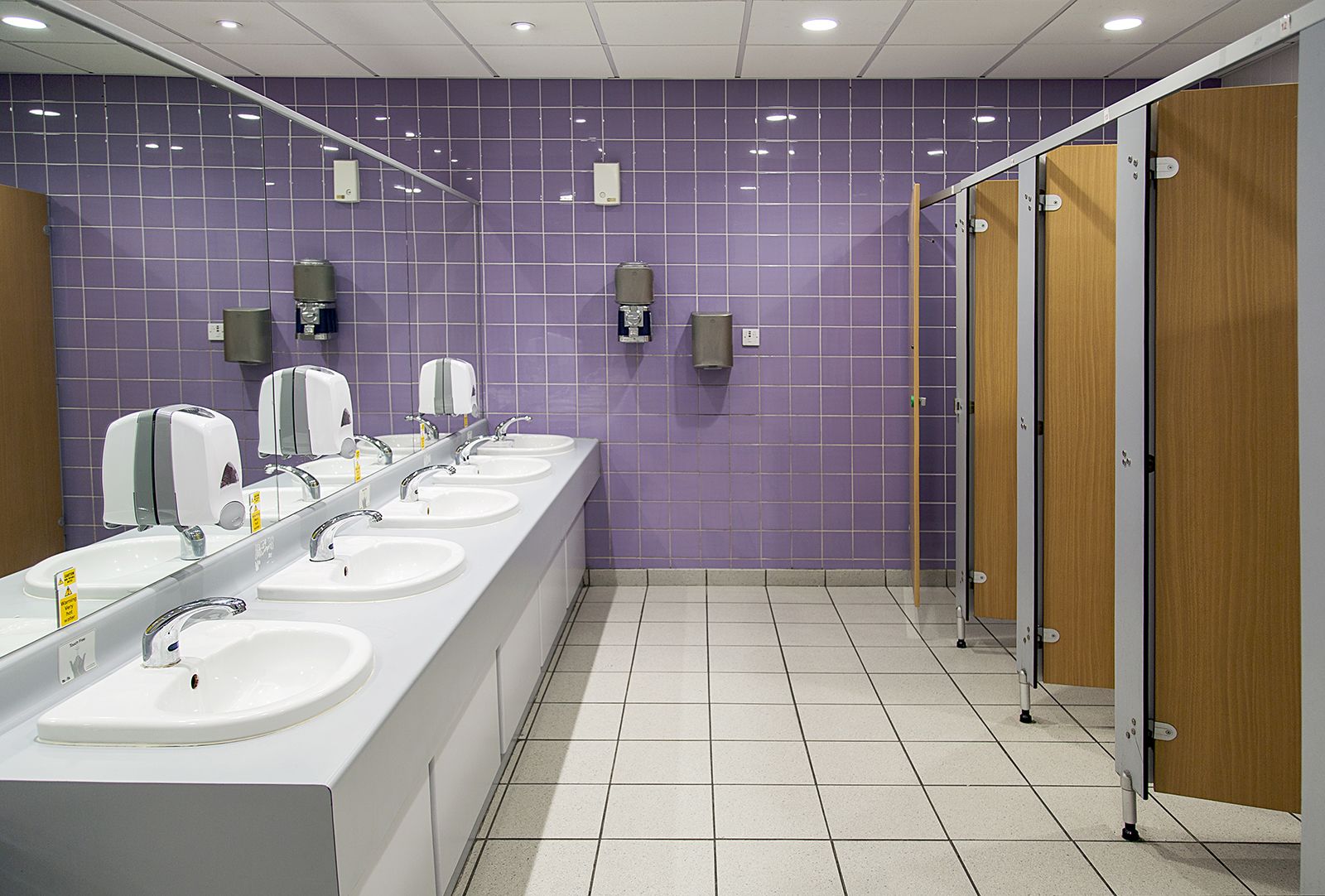
Cleaning public restrooms requires thoroughness, attention to detail, and a strategic approach to ensure hygiene and minimize the spread of germs. Here’s a step-by-step guide with professional tips for cleaning public restrooms efficiently:
1. Wear Protective Gear
- Tip: Always wear gloves, protective eyewear, and a face mask when cleaning public restrooms to protect yourself from exposure to harmful chemicals and bacteria.
- Benefit: Ensures safety from potential contaminants and chemical splashes.
2. Use Signage
- Tip: Place “Closed for Cleaning” signs outside the restroom to inform users that the facility is temporarily unavailable.
- Benefit: Prevents people from entering during cleaning and reduces the chance of accidents.
3. Empty Trash Bins First
- Tip: Start by emptying all trash cans in the restroom, including sanitary waste bins. Replace liners and disinfect the exterior of the bins.
- Benefit: Prevents odors and the overflow of trash, making the space more inviting.
4. Pre-Treat Toilets and Urinals
- Tip: Apply a toilet bowl cleaner or disinfectant inside all toilets and urinals and allow it to sit while you clean other areas. This dwell time allows the cleaner to break down stains, odors, and bacteria.
- Benefit: Reduces scrubbing time and increases cleaning effectiveness.
5. Disinfect High-Touch Surfaces
- Tip: Wipe down high-touch areas such as door handles, light switches, faucets, hand dryers, and paper towel dispensers using a disinfectant spray or wipes.
- Benefit: Helps reduce the spread of germs and ensures a safer environment for users.
6. Clean Mirrors
- Tip: Use a glass cleaner and microfiber cloth to clean mirrors. Wipe in a circular motion to avoid streaks, and make sure to remove all fingerprints, smudges, and splashes.
- Benefit: Creates a clean, polished appearance and improves the overall look of the restroom.
7. Wipe Down Counters and Sinks
- Tip: Use a disinfectant cleaner to wipe down countertops and sinks. Focus on removing soap scum, toothpaste residue, and grime around faucets. Pay special attention to the area beneath soap dispensers where drips accumulate.
- Benefit: Ensures a hygienic space and prevents mold or mildew from forming.
8. Scrub Toilets and Urinals
- Tip: Scrub toilets and urinals using a toilet brush. Focus on the inside of the bowl, under the rim, and flush mechanisms. After scrubbing, flush the toilet or urinal to rinse away the cleaner.
- Benefit: Removes stains, prevents odors, and eliminates harmful bacteria.
9. Disinfect Toilet and Urinal Exteriors
- Tip: Spray disinfectant on the exterior of toilets and urinals, including the flush handles, seat, and base. Wipe down thoroughly with a disposable cloth or paper towel.
- Benefit: Reduces the spread of germs, especially on surfaces touched by multiple users.
10. Restock Supplies
- Tip: Refill toilet paper, paper towels, soap dispensers, and any other consumables. Ensure that hand sanitizers (if available) are filled and functioning.
- Benefit: Prevents inconvenience for users and maintains a well-stocked restroom at all times.
11. Mop the Floor
- Tip: Sweep the floor first to remove dirt, dust, and debris. Then mop the floor using a disinfectant cleaner, paying attention to the area around toilets, urinals, and sinks. Use a wet floor sign to warn users of slippery surfaces.
- Benefit: Leaves the floor clean and sanitary, preventing the buildup of grime and reducing the spread of bacteria.
12. Ventilation and Odor Control
- Tip: Ensure the ventilation system is working properly to keep the air circulating. Use air fresheners, deodorizers, or automatic air freshening systems to keep the restroom smelling fresh.
- Benefit: Enhances user experience by reducing odors and maintaining air quality.
13. Inspect and Finish
- Tip: Perform a final walkthrough to ensure all areas are clean, supplies are stocked, and the floor is dry. Double-check high-traffic areas for missed spots.
- Benefit: Ensures consistent cleanliness and reduces the likelihood of complaints from users.
14. Keep a Cleaning Schedule
- Tip: Maintain a regular cleaning schedule, especially during peak hours, and log each cleaning session for accountability.
- Benefit: Ensures that restrooms remain clean and safe for users throughout the day.
Additional Tips:
- Use Commercial-Grade Cleaners: Ensure all cleaning products are powerful enough to handle the demands of public restrooms, especially high-traffic areas.
- Deep Clean Weekly: Perform a deeper clean, including grout scrubbing and drain cleaning, once a week to prevent buildup.
- Keep Extra Supplies: Always have extra supplies on hand to quickly restock between deep cleans.
By following these tips, you can maintain a high standard of cleanliness, ensuring that public restrooms are hygienic and presentable for users at all times.
