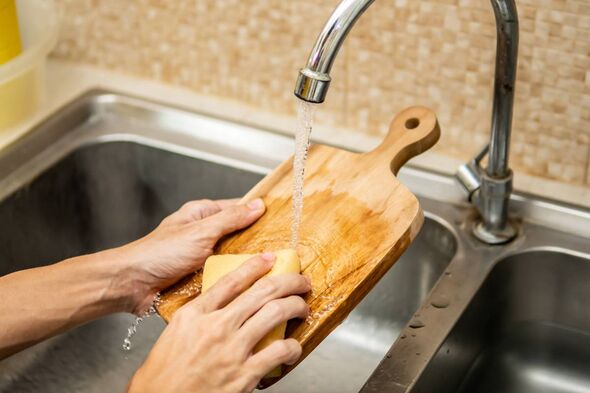
To effectively remove germs from cutting boards, especially those used for raw meat, it’s important to disinfect them properly. Here are a few safe methods:
1. Hot Soapy Water and Scrubbing
- After each use, scrub the cutting board with hot, soapy water.
- Rinse thoroughly and allow it to air dry, or wipe it with a clean towel.
2. White Vinegar (For Wooden Cutting Boards)
- Pour white vinegar on the surface, let it sit for a few minutes, then rinse with hot water.
- Vinegar is antibacterial and works well on wood, but it may not be as effective against all pathogens, so follow up with another method if the board has been used for raw meat.
3. Diluted Bleach Solution (For Plastic Cutting Boards)
- Mix 1 tablespoon of unscented chlorine bleach in 1 gallon of water.
- Pour over the cutting board and let it sit for a couple of minutes, then rinse with hot water and let it air dry.
- Bleach is excellent for plastic boards, as it kills most germs, but it’s not recommended for wooden boards since it can cause damage.
4. Hydrogen Peroxide (Good for Both Wood and Plastic)
- Pour 3% hydrogen peroxide over the cutting board and let it sit for a few minutes.
- Rinse with hot water and dry. This disinfects effectively without causing damage to most cutting board materials.
5. Lemon and Salt (For Odors and Mild Disinfection on Wood)
- Sprinkle salt on the board, cut a lemon in half, and rub it over the surface, letting the juice and salt scrub the board.
- Rinse with warm water and let it dry. This method is gentler and helps deodorize, but may not fully disinfect.
6. Dishwasher (For Plastic Cutting Boards)
- Many plastic cutting boards are dishwasher-safe, so place them on the top rack and run a hot wash cycle.
- The heat and detergent in the dishwasher help sanitize the board.
Tips to Keep in Mind
- Separate Boards: Use separate boards for raw meat, fruits, and vegetables to reduce cross-contamination.
- Replace Boards as Needed: If a board is deeply scored or shows signs of wear, it’s best to replace it, as bacteria can hide in the grooves.
Following these methods will keep your cutting boards clean and reduce the risk of cross-contamination in your kitchen.
