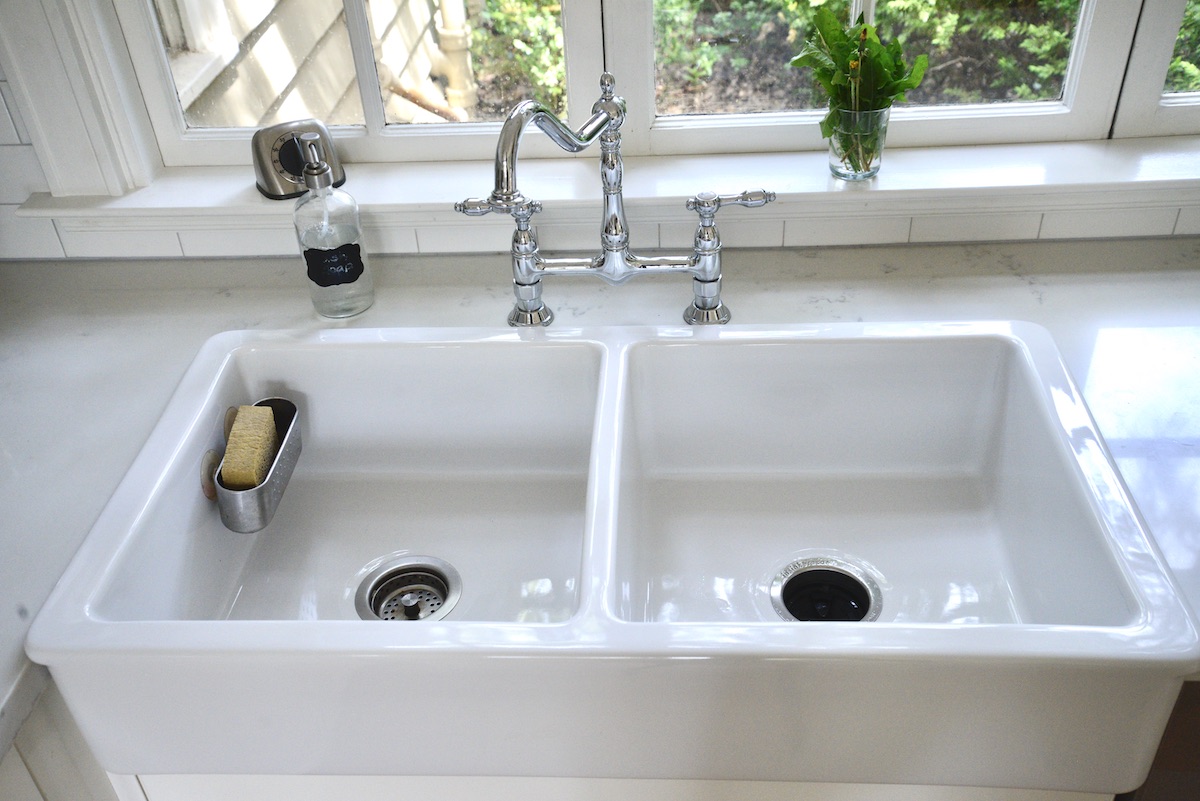
Cleaning a white sink requires a little extra attention to prevent stains, soap scum, and discoloration from dulling its brightness. Here’s a step-by-step guide to restoring and maintaining a spotless, white sink, whether it’s made of porcelain, ceramic, or enameled cast iron:
Materials Needed:
- Baking soda
- White vinegar or lemon juice
- Dish soap or mild detergent
- Soft sponge or cloth
- Toothbrush (for hard-to-reach areas)
- Hydrogen peroxide (for deep stains)
- Lemon (optional, for fresh scent)
- Paper towels or microfiber cloth
- Non-abrasive scrub pad
Step-by-Step Guide to Clean a White Sink:
1. Rinse the Sink
- Start with a Quick Rinse: Use warm water to rinse away any loose debris, soap scum, or residue. Make sure the sink is empty and relatively clean before applying any cleaners.
2. Apply Baking Soda
- Sprinkle Baking Soda: Generously sprinkle baking soda across the entire surface of the sink. Baking soda is a mild abrasive that will help lift stains and grime without scratching the surface.
- Scrub with a Soft Sponge: Use a soft, damp sponge or cloth to scrub the baking soda into the sink. Focus on areas where you see stains or discoloration, including around the drain and faucet.
Pro Tip: If your sink has stubborn stains or hard water marks, use a non-abrasive scrub pad to gently scrub these areas. Avoid using steel wool or harsh abrasive pads, as they can scratch the surface.
3. Clean Around the Faucet and Drain
- Use a Toothbrush for Tight Spots: Apply some baking soda to an old toothbrush and scrub around the faucet base, handles, and the drain. These areas often collect grime and mineral deposits.
- Rinse with Water: After scrubbing, rinse away the baking soda residue with warm water.
4. Use Vinegar or Lemon Juice for Stains
- Apply Vinegar or Lemon Juice: For any remaining stains or soap scum, spray or pour white vinegar or lemon juice over the stained areas. These natural acids help dissolve hard water stains and soap residue while also brightening the sink’s surface.
- Let it Sit: Allow the vinegar or lemon juice to sit for 5-10 minutes before scrubbing.
- Scrub and Rinse: Scrub the areas again with your sponge or scrub pad, then rinse thoroughly with water.
Pro Tip: Vinegar and baking soda will fizz when combined, which can help break down dirt and stains in hard-to-reach places, such as around the drain.
5. Treat Deep Stains with Hydrogen Peroxide
- Hydrogen Peroxide Paste: For tougher stains or discoloration, create a paste by mixing baking soda and a small amount of hydrogen peroxide. Apply the paste to the stains and let it sit for 15-20 minutes.
- Scrub and Rinse: After allowing the paste to sit, scrub the area with your sponge, then rinse with warm water.
Pro Tip: Hydrogen peroxide is a gentle bleach that won’t harm the sink but is effective at removing deep stains, making it ideal for brightening white surfaces.
6. Polish and Shine
- Final Wipe: After rinsing the sink, dry it thoroughly with a microfiber cloth or paper towels to prevent water spots.
- Optional: Lemon for Freshness: If you want to leave your sink smelling fresh, cut a lemon in half and rub it around the sink surface after cleaning. The citric acid will help with any leftover stains and leave a pleasant scent.
Extra Tips for Maintaining a White Sink:
- Daily Maintenance: After each use, rinse the sink and wipe it down with a clean cloth to prevent soap scum and stains from building up.
- Prevent Hard Water Stains: If you have hard water, dry the sink after use to avoid mineral deposits and water spots. Consider installing a water softener if hard water buildup is a common issue.
- Monthly Deep Cleaning: Perform a deeper cleaning with baking soda, vinegar, or hydrogen peroxide once a month to maintain the bright white appearance.
- Avoid Harsh Cleaners: Don’t use bleach, ammonia, or abrasive cleaners that can damage the finish of the sink over time. Stick to gentle, natural cleaners for regular upkeep.
- Use a Sink Grid: If your sink is prone to scratches, use a sink grid or mat to protect the surface from utensils and heavy pots.
By following these steps and tips, your white sink will stay clean, bright, and stain-free!
