Cleaning blinds can be a tedious task, but with the right approach, it can be done efficiently and effectively. Here’s a step-by-step guide on how to clean different types of blinds:
1. Identify the Type of Blinds
Blinds come in various materials such as wood, faux wood, aluminum, fabric, and vinyl. The cleaning method will vary depending on the material.
2. Gather Your Cleaning Supplies
- Microfiber cloths or duster: To remove dust.
- Vacuum cleaner with brush attachment: For light dusting.
- Mild soap or detergent: For spot cleaning.
- Warm water: For washing.
- Sponge or soft brush: For scrubbing.
- Towel: For drying.
- White vinegar: For deep cleaning (optional).
- Bathtub: For soaking fabric or vinyl blinds (optional).
3. Cleaning Methods by Blind Type
A. Wood Blinds
- Dusting
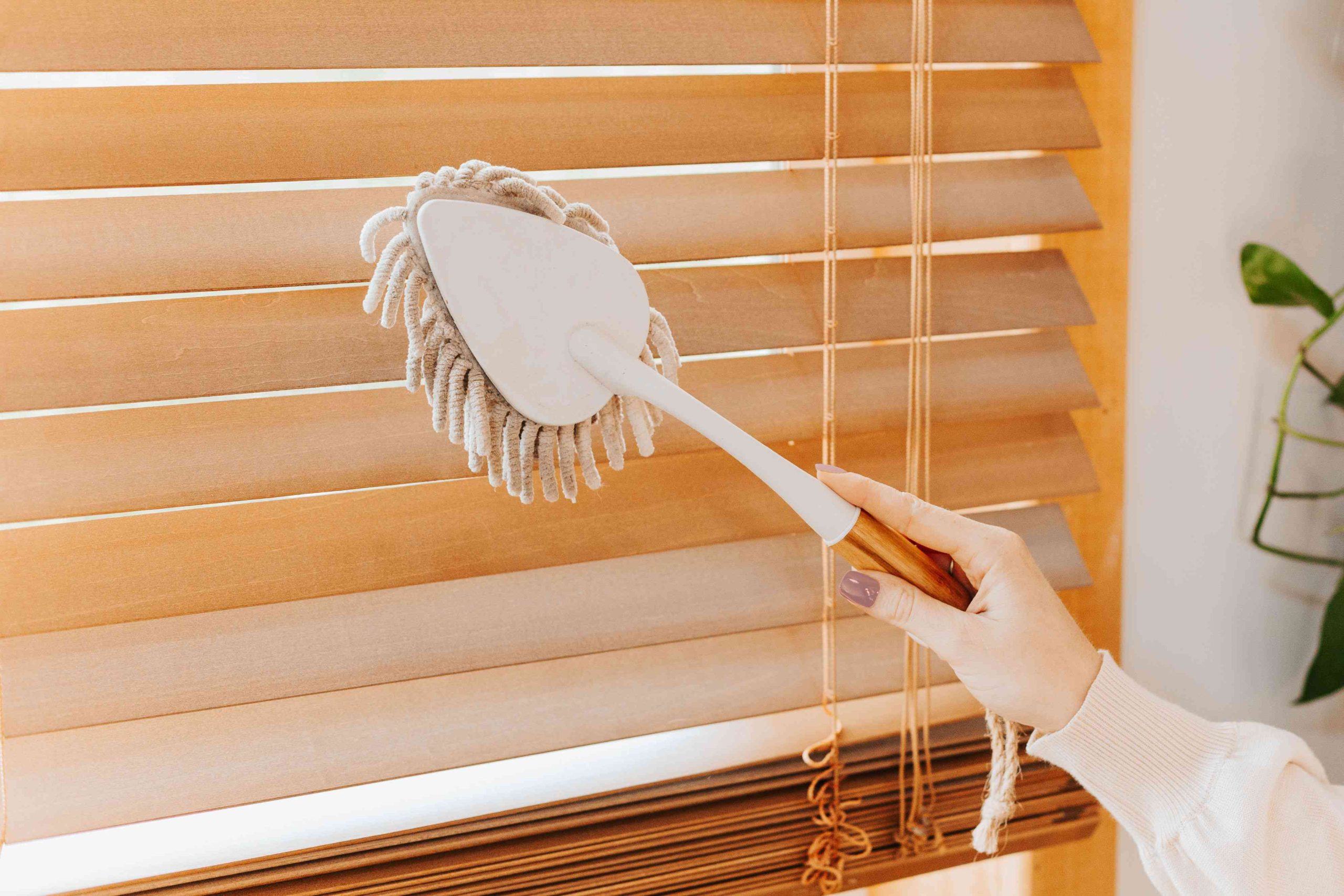
- Use a microfiber cloth or a vacuum with a brush attachment to gently dust each slat. Close the blinds and run the cloth across the slats, then reverse and repeat.
- Spot Cleaning
- If there are any stains, use a damp cloth with a mild soap solution. Wipe gently and avoid soaking the wood, as excessive moisture can damage it.
- Polishing
- If desired, you can apply a wood polish or conditioner to keep the blinds looking fresh.
B. Faux Wood and Vinyl Blinds
- Dusting
- Dust the blinds with a microfiber cloth or vacuum with a brush attachment.
- Washing
- For a deeper clean, mix a mild soap or detergent with warm water. Dampen a cloth or sponge and wipe down each slat. For tough grime, use a soft brush to scrub.
- Rinsing and Drying
- Wipe the slats with a clean, damp cloth to remove any soap residue. Dry with a towel to prevent water spots.
- Deep Cleaning (Optional)
- Remove the blinds from the window and place them in a bathtub filled with warm, soapy water. Let them soak for 15–30 minutes, then gently scrub with a sponge. Rinse with clean water and hang to dry.
C. Aluminum Blinds
- Dusting
- Dust each slat with a microfiber cloth or vacuum with a brush attachment.
- Cleaning
- Mix warm water with a few drops of mild dish soap. Use a damp cloth to wipe down each slat. For sticky spots, scrub gently with a sponge.
- Rinsing and Drying
- Wipe with a clean, damp cloth to remove any soap, then dry with a towel.
- Deep Cleaning
- Like vinyl blinds, aluminum blinds can be soaked in a bathtub filled with warm, soapy water. After soaking, rinse and dry them thoroughly before rehanging.
D. Fabric Blinds
- Vacuuming
- Use a vacuum with a brush attachment to remove dust and debris. Be gentle to avoid damaging the fabric.
- Spot Cleaning
- For stains, mix a small amount of mild detergent with water. Use a soft cloth or sponge to dab at the stain gently. Blot, don’t rub, to avoid spreading the stain.
- Deep Cleaning
- Some fabric blinds can be removed and washed by hand or in a washing machine on a gentle cycle (check the manufacturer’s instructions). Air dry them and iron if necessary before rehanging.
E. Vertical Blinds
- Dusting
- Close the blinds and use a duster or microfiber cloth to remove dust from each slat. For fabric vertical blinds, vacuum with a brush attachment.
- Spot Cleaning
- Clean spots with a mild soap and water solution. Use a cloth or sponge to dab the stains. Rinse and dry each slat.
- Deep Cleaning (For Vinyl or Plastic)
- If the blinds are particularly dirty, remove them and soak in a bathtub with warm, soapy water. After soaking, rinse, dry, and rehang.
4. Maintenance Tips
- Regular Dusting: Dust your blinds weekly to prevent buildup.
- Avoid Excess Water: Especially for wood blinds, avoid soaking or using excessive water to prevent warping or damage.
- Use the Right Tools: Always use soft, non-abrasive tools to clean blinds to avoid scratches.
- Handle with Care: When removing or rehanging blinds, do so gently to avoid damaging the slats or the mechanism.
Summary
Cleaning blinds regularly keeps them looking fresh and extends their lifespan. The key is to use the appropriate method based on the material of your blinds. With the right tools and techniques, you can keep your blinds clean and dust-free with minimal effort.
