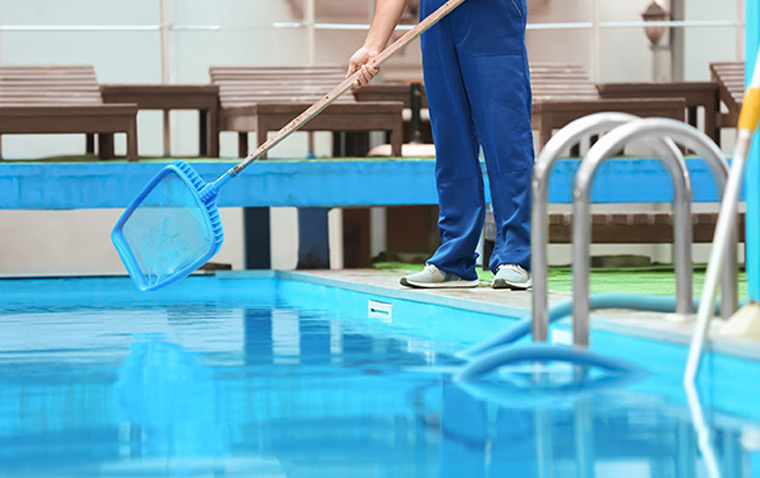
Professionally cleaning a pool involves a series of steps to ensure it is safe, visually appealing, and free from debris, algae, and bacteria. Here’s a step-by-step guide to achieve a professional-level pool clean:
1. Assemble the Right Tools
- Pool Skimmer Net (for surface debris)
- Pool Brush (for scrubbing walls, tiles, and floor)
- Pool Vacuum (manual or automated for deeper cleaning)
- Water Testing Kit (for chemical balance)
- Chlorine/Pool Shock (for sanitation)
- Algaecide (if algae is present)
- pH and Alkalinity Adjusters (pH increaser/decreaser, sodium bicarbonate)
- Filter Cleaning Supplies (backwash hose, filter cleaner)
2. Skim the Surface
- Tip: Use a long-handled skimmer to remove leaves, insects, and other floating debris from the surface of the pool. Start this process before any other cleaning.
- Frequency: Ideally, this should be done daily to prevent debris from sinking.
3. Brush Pool Walls, Steps, and Floor
- Tip: Use a stiff pool brush to scrub the pool walls, floor, tiles, and steps. Pay extra attention to areas with visible dirt, algae, or build-up, particularly near the waterline where grime tends to accumulate.
- Benefit: Prevents algae buildup and reduces the likelihood of staining on pool surfaces.
- Frequency: Weekly or more frequently if algae is visible.
4. Vacuum the Pool
- Manual Vacuum: If you’re using a manual vacuum, attach it to your pool’s filtration system and vacuum the bottom of the pool, moving methodically from one side to the other.
- Automatic Vacuum: If using an automatic pool vacuum, turn it on and let it clean the bottom and sides. Ensure it covers all areas of the pool.
- Benefit: Removes settled debris and prevents dirt from clouding the water.
- Frequency: Weekly or biweekly, depending on pool use.
5. Clean the Pool Filter
- Tip: Whether you have a sand, cartridge, or DE (diatomaceous earth) filter, maintaining it is critical for clear water. Backwash or clean the filter based on your pool system’s recommendations.
- Backwashing: For sand and DE filters, backwashing involves reversing the water flow to remove built-up dirt.
- Cartridge Filters: Remove and rinse cartridges thoroughly with a hose.
- Frequency: Every 1-2 weeks, or more frequently if the pool is heavily used.
6. Test and Adjust the Water Chemistry
Key Levels to Test:
- Chlorine: Ensure chlorine levels are between 1-3 ppm to effectively kill bacteria and sanitize the pool.
- pH Levels: Maintain a pH of 7.2 to 7.6. If the pH is too high or too low, it can cause irritation or damage to pool equipment.
- Total Alkalinity: Keep alkalinity between 80-120 ppm to stabilize pH levels.
- Calcium Hardness: Ensure calcium hardness is between 200-400 ppm to prevent scaling or corrosion of pool surfaces.
- Tip: Use a water testing kit or strips, and adjust chemicals as needed (e.g., adding pH increaser/decreaser, chlorine, or sodium bicarbonate).
- Frequency: Test water chemistry weekly, or more often during heavy use.
7. Shock the Pool
- Tip: Pool shock (superchlorination) involves adding a large dose of chlorine to kill bacteria, algae, and other contaminants that regular chlorination may miss.
- How to Shock:
- Follow the product instructions for dosage.
- Add shock in the evening (to avoid the sun breaking down chlorine).
- Circulate water for several hours after shocking to distribute the chemicals.
- Frequency: Every 1-2 weeks, or after heavy use or rainstorms.
8. Check and Clean Skimmer and Pump Baskets
- Tip: Empty the skimmer and pump baskets of any debris. These baskets trap leaves and dirt before they reach the filter, so keeping them clean prevents clogs.
- Frequency: Weekly, or more often if debris builds up quickly.
9. Use Algaecide (If Needed)
- Tip: If algae are visible, use an algaecide to treat the pool. Follow the instructions on the product for dosage, and apply it after brushing and vacuuming.
- Benefit: Prevents algae from taking over the pool and causing cloudy or green water.
- Frequency: Use algaecide as needed or during routine maintenance to prevent growth.
10. Run the Pool Pump
- Tip: Ensure your pool pump runs long enough each day to circulate water and keep chemicals evenly distributed. For most pools, running the pump for 8-12 hours per day is sufficient, especially during hot weather or frequent use.
- Benefit: Good circulation prevents algae and helps maintain clean water.
11. Clean the Pool Deck
- Tip: Sweep or hose down the pool deck to remove dirt and debris that can be tracked into the pool. A clean deck helps maintain a clean pool.
- Frequency: Weekly or as needed.
12. Monitor Water Level
- Tip: The water level should be at the halfway point of your pool skimmer. If the level is too low, your pump may run dry, and if it’s too high, the skimmer may not work effectively.
- Frequency: Check weekly and adjust as needed (add water or drain excess).
By following these steps regularly, you can maintain a crystal-clear, sanitary pool, and avoid larger issues that may require more extensive cleaning or repairs. Professional cleaning standards focus on consistency, precision, and using the right tools to get the job done efficiently.
