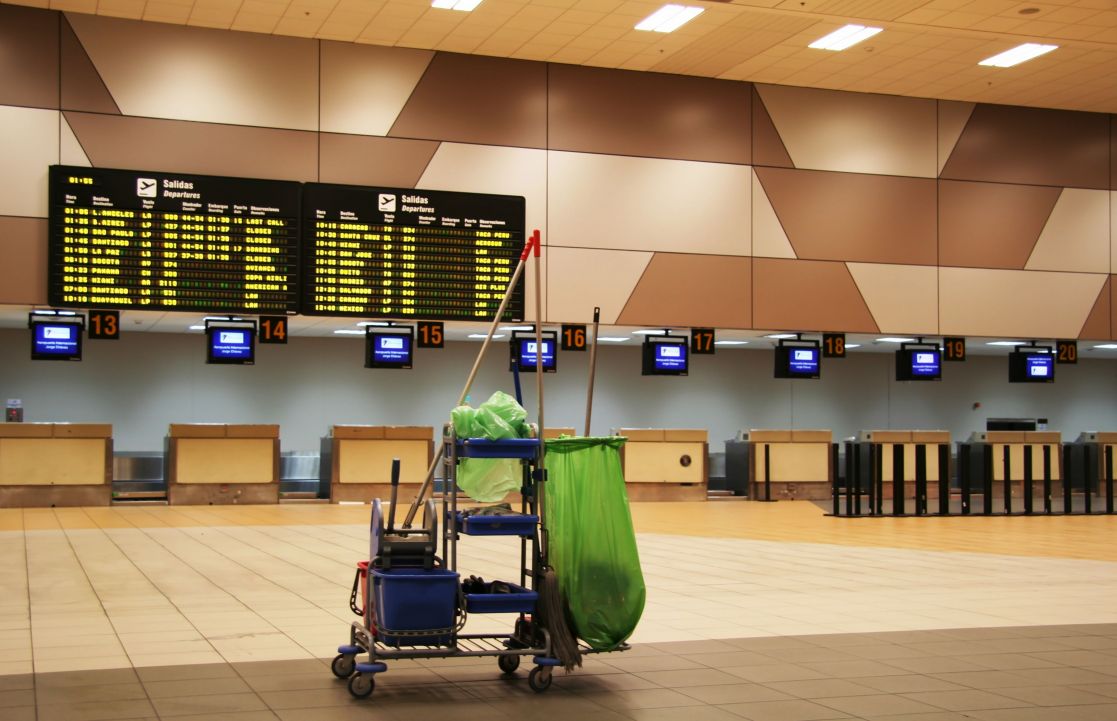
Deep cleaning an airport involves thorough and meticulous cleaning of high-traffic areas, surfaces, and facilities to maintain a hygienic and safe environment. This is particularly important in airports due to the high volume of passengers and staff moving through the space. Here’s a guide to conducting a deep cleaning in an airport, focusing on key areas and safety protocols:
1. Gather Necessary Supplies
Deep cleaning an airport requires a variety of cleaning supplies and equipment, including:
- Industrial-strength disinfectants (approved for use in public spaces)
- Microfiber cloths and disposable wipes
- Mops, buckets, and brooms
- Vacuum cleaners (preferably with HEPA filters)
- Floor cleaning machines (auto scrubbers for large areas)
- Window and glass cleaners
- Trash bags and bins
- Personal protective equipment (PPE) for staff (gloves, masks, gowns, face shields)
- Sanitizing foggers or sprayers (optional, for large areas)
2. Plan the Cleaning Schedule
Since airports operate 24/7, cleaning must be done in phases to avoid disruptions:
- Schedule cleaning during low-traffic hours: Deep cleaning is best done overnight or during non-peak hours.
- Divide the airport into sections: Clean areas like terminals, restrooms, baggage claim, and waiting areas systematically to ensure thoroughness.
3. High-Traffic Area Cleaning
These areas require more frequent and intensive cleaning due to constant use by passengers.
A. Terminals and Waiting Areas
- Disinfect all seating areas: Use disinfectant sprays or wipes to clean seats, armrests, and tables. Pay extra attention to areas where passengers eat or wait for long periods.
- Vacuum carpets and mop hard floors: Use HEPA-filter vacuums for carpets to capture dust and allergens. Mop all hard surfaces with disinfectant solution to remove dirt and germs.
- Clean kiosks and counters: Check-in counters, self-service kiosks, and ticketing machines are high-touch points. Wipe them down frequently with disinfectant.
- Dust and clean: Dust all surfaces, including countertops, ledges, information desks, and signage, and disinfect them.
B. Gate Areas
- Disinfect gate seating and charging stations: Focus on high-touch surfaces like armrests, charging ports, and screens.
- Clean boarding pass scanners and gate check-in machines: Disinfect after each flight or on a regular schedule.
- Mop floors: Clean thoroughly, especially near the boarding gate doors.
C. Baggage Claim Areas
- Disinfect luggage carousels: These should be wiped down regularly due to constant passenger contact.
- Clean floors and trash removal: Sweep and mop floors regularly, ensuring that trash bins are emptied frequently and disinfected.
- Wipe handrails and cart handles: Disinfect the handles of luggage carts and the handrails around baggage claim areas.
4. Restroom Deep Cleaning
Airport restrooms require frequent deep cleaning due to their constant use.
- Disinfect all surfaces: This includes sinks, countertops, toilet seats, flush handles, door handles, partitions, and paper towel dispensers.
- Restock supplies: Ensure that soap, toilet paper, paper towels, and hand sanitizer dispensers are always refilled.
- Mop floors with disinfectant: Pay special attention to floor areas around toilets and sinks, as these are prone to becoming dirty quickly.
- Clean mirrors and glass surfaces: Use glass cleaner to ensure clear, streak-free mirrors and glass.
- Empty trash bins frequently: Regularly empty bins and disinfect them to prevent odor and germ buildup.
5. Food Courts and Dining Areas
- Clean and disinfect tables and chairs: Wipe down all dining surfaces after each use, using disinfectant for thorough cleaning.
- Disinfect condiment stations and counters: Areas where people frequently touch, like condiment counters and self-serve drink stations, should be cleaned frequently.
- Sanitize tray returns: Disinfect the areas where people drop off used trays and dishes.
- Sweep and mop floors: Clean spills immediately and mop the entire floor area with disinfectant regularly.
- Trash disposal: Ensure trash bins are emptied regularly and wiped down to prevent buildup of bacteria and odors.
6. Security Checkpoints
Security checkpoints are high-contact areas where both passengers and staff come into frequent contact with surfaces.
- Disinfect trays and belts: Wipe down all trays used in security checks and conveyor belts with disinfectant after every use.
- Sanitize bins and equipment: Clean the bins and security equipment, including the x-ray machines and metal detectors.
- Mop and vacuum floors: Clean the floors thoroughly around the checkpoint to remove any debris or dirt that may have accumulated.
7. Elevators, Escalators, and Moving Walkways
- Disinfect handrails: Wipe down handrails on escalators and moving walkways frequently throughout the day.
- Clean elevator buttons and walls: Elevator buttons are high-touch areas that need frequent disinfecting.
- Mop and vacuum: Regularly clean floors on escalators, inside elevators, and on walkways.
8. Offices and Staff Areas
These areas also need to be deep cleaned to maintain hygiene for airport staff.
- Disinfect desks, keyboards, and phones: Clean frequently touched surfaces like workstations, phones, and equipment.
- Vacuum and mop floors: Use vacuum cleaners with HEPA filters in office areas and mop hard surfaces with disinfectant.
- Clean break rooms: Disinfect all surfaces, including tables, chairs, countertops, microwaves, and refrigerators.
9. Window and Glass Cleaning
- Clean all glass surfaces: Regularly clean windows, doors, and glass partitions using a glass cleaner to remove fingerprints, smudges, and dirt.
- Wipe down frames and sills: Don’t forget the window frames and sills, which often accumulate dust and dirt.
10. Use of Sanitizing Foggers (Optional)
For large, open spaces or areas that are difficult to clean manually, using a sanitizing fogger or sprayer can help disinfect broad areas quickly. This is especially useful for areas like terminals and baggage claim zones.
11. Final Touches
- Replace air filters in HVAC systems regularly to ensure clean air circulation.
- Inspect all areas to ensure nothing has been missed, especially high-touch points like door handles, light switches, and public phones.
12. Staff Safety and Protocols
- Ensure that all cleaning staff are equipped with proper PPE (gloves, masks, face shields) while cleaning to protect themselves from exposure.
- Train staff on the correct use of cleaning products, especially disinfectants, to ensure they are used effectively and safely.
- Encourage regular hand hygiene and the proper disposal of cleaning materials like used gloves and wipes.
By following these detailed steps, airport facilities can maintain a clean, hygienic environment that ensures the safety and comfort of travelers, staff, and crew. Regular deep cleaning, especially in high-traffic areas, is essential for preventing the spread of germs and maintaining operational efficiency.
