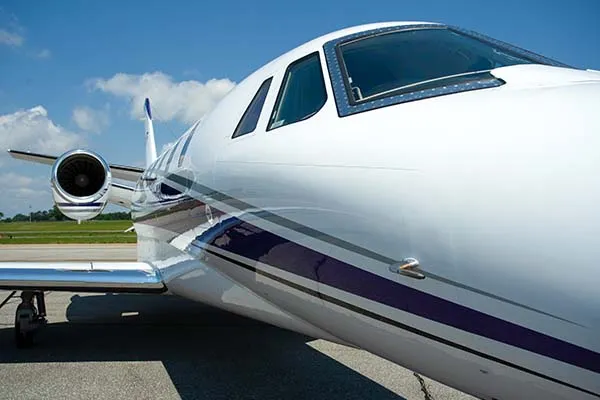
Outside Surface Aircraft Cleaning
Restoring the aircraft’s surface to its original state is the goal of aircraft exterior cleaning, sometimes referred to as aircraft exterior detailing service. The aircraft can be cleaned on the outside with a water wash, a just wash, or just a cloth and spray cleaner. The goal of external cleaning is to get rid of dirt, bugs, exhaust streaks, oil stains, and spots from the outside of the aircraft body. This improves the aircraft’s appearance and lengthens the life of its paint job, outside body, and related parts.
Polishing Painted and Unpainted Surfaces in Aircraft
To improve their appearance and get rid of surface corrosion, brightwork, or the unpainted surfaces of aircraft, has to be polished. When oxidation starts to show, these areas are polished by hand with a non-abrasive cleaning/polishing solution or with an orbital buffer. To avoid damage, surrounding painted and plastic exterior surfaces (such light lenses) are covered with masking. All polishing residue is eliminated, leaving surfaces with a gleaming mirror sheen. Painted surfaces need to be polished in some places to get rid of tough stains, usually found around exhaust areas, and to preserve the aircraft’s high gloss exterior appearance
Polishing Unpainted Aluminum with an Aircat
When thinking about cleaning the outside of an airplane, polishing unpainted metal is an essential task. The leading edges of the airplane’s wings, the vertical and horizontal stabilizers, the engine inlets, and the cockpit window frames are all polished. To protect painted surfaces, the regions are covered with masks. Aluminum can be polished manually or with the use of orbital buffers, non-abrasive pads, and aluminum cleaning polish that is not abrasive. Every exterior cleaning procedure complies with manufacturer requirements
Cleaning Techniques
There are three main techniques for cleaning the outside of an aircraft: wet wash, dry wash, and polishing. The process of polishing can be carried either mechanically with certain polishing machines or manually by hand. The cleaning provider you select will inform you of the degree of soiling and the final desired appearance in the result.
Wet Cleaning
The majority of dirt and carbon deposits may be removed from airplanes using the wet wash method. However, there is very little to no benefit to this procedure for cleaning off oxide and corrosion layers. Using this technique, the outside of the aircraft is cleaned by spraying or mopping cleaning components, and the surface is then rinsed with a high-pressure water wash. This type of cleaning primarily uses emulsion or alkaline cleaning chemicals.
Dry Wash When the objective is to eliminate airport film, dust, and tiny soil and dirt accumulations, the aircraft is subjected to a dry wash. When it is inappropriate to use liquids, dry washing is employed. It’s critical to comprehend that the dry cleaning technique
It’s critical to realize that the dry wash approach is ineffective in eliminating thick carbon, grease, or oil deposits, particularly in the engine exhaust sections. Materials for dry washing are applied using spray, mops, or cloths, and then removed with clean, dry rags or by dry mopping.
Sanding
Polishing, which is often done after the surfaces have been cleaned, brings back the luster to the aircraft’s painted and unpainted surfaces. Additionally, corrosion and oxidation can be eliminated by polishing. Polishing materials come in different shapes and levels of abrasiveness. In certain situations, it is crucial to follow the instructions provided by the aircraft manufacturer.
Cleaning Guidelines
Every cleaning task is completed in accordance with industry standards that have been certified and accepted by equipment makers, as well as the requirements set forth by the airlines. The suggested cleaning and servicing procedures provided by the aircraft manufacturer are followed, together with any applicable building and safety standards.
