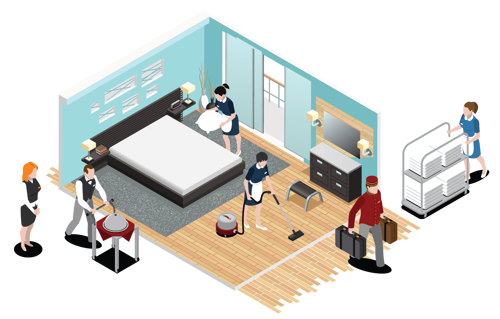
Methods for cleaning a hotel room
Sanitizing a hotel room is crucial for maintaining a clean and safe environment for guests, particularly in light of health concerns like COVID-19 or other infectious agents. Here’s a step-by-step guide on how to properly sanitize a hotel room:
1. Wear Protective Gear
- Tip: Wear disposable gloves, a face mask, and, if necessary, protective eyewear. Change gloves between rooms to prevent cross-contamination.
- Benefit: Protects you from direct contact with germs and harmful cleaning agents.
2. Ventilate the Room
- Tip: Open windows and doors to allow fresh air to circulate while you clean. This helps reduce airborne particles and fumes from cleaning products.
- Benefit: Improves air quality and disperses any odors or chemicals from cleaning products.
3. Remove Linens and Towels Safely
- Tip: Strip the bed of all linens (sheets, pillowcases, duvet covers) and remove towels. Roll them up carefully to avoid shaking them, which can release germs into the air. Place them directly into a laundry bag for washing.
- Benefit: Prevents the spread of bacteria and viruses through the air or surfaces.
4. Empty Trash and Sanitize the Bins
- Tip: Empty all trash cans, including those in the bathroom. Use a disinfectant spray or wipes to sanitize the trash bins inside and out, paying attention to the lid and rim.
- Benefit: Prevents bacteria from growing in trash bins and eliminates unpleasant odors.
5. Dust Surfaces and High-Touch Areas
- Tip: Use a microfiber cloth to dust surfaces like shelves, headboards, light fixtures, and furniture. Be careful not to disturb dust particles excessively.
- Benefit: Removes dust that could harbor allergens or germs before sanitizing.
6. Disinfect High-Touch Points
Focus on High-Touch Surfaces:
- Door handles (both inside and outside)
- Light switches
- TV remote controls
- Telephones
- Alarm clocks
- Bedside tables
- Thermostats
- Drawer handles
- Bathroom fixtures (faucets, toilet flush handles, shower knobs)
How to Disinfect:
- Use EPA-approved disinfectants effective against viruses and bacteria, such as a bleach solution, alcohol (at least 70% concentration), or a commercial disinfectant spray.
- Allow disinfectants to sit for the recommended contact time (typically 2-10 minutes, depending on the product) before wiping.
- Tip: Pay special attention to any items guests frequently touch, like the TV remote. Wrap the remote in plastic or place it in a sanitized bag after cleaning.
- Benefit: Reduces the risk of transmitting germs between guests through commonly touched surfaces.
7. Clean and Disinfect the Bathroom
Toilet:
- Apply a disinfectant cleaner to the inside of the toilet bowl and let it sit for several minutes before scrubbing with a toilet brush.
- Disinfect the exterior of the toilet, focusing on the flush handle, lid, seat, and base.
Sinks and Countertops:
- Spray sinks, faucets, and countertops with a disinfectant cleaner, paying attention to areas where water tends to pool.
- Wipe down all surfaces thoroughly and let them air dry if possible.
Shower/Bathtub:
- Scrub the tub or shower area with a disinfectant cleaner. Focus on the fixtures, walls, and any surfaces that come into contact with the guest’s skin.
- Don’t forget to clean the shower curtain or door handle.
Mirrors:
- Use a glass cleaner to remove smudges and fingerprints from mirrors, but avoid using disinfectant directly on the glass as it may leave streaks.
Tip: Use disposable wipes or cloths for cleaning bathrooms to avoid cross-contamination between areas.
- Benefit: Ensures thorough sanitation in areas prone to moisture and high bacterial load.
8. Vacuum the Room
- Tip: Use a vacuum with a HEPA filter to clean floors, carpets, and upholstery, as this will trap fine particles, dust, and allergens.
- Benefit: Helps remove dirt and contaminants that could otherwise become airborne or transferred to other surfaces.
9. Sanitize Upholstery and Curtains
- Tip: Lightly spray or steam clean upholstered furniture, curtains, and fabric surfaces using an appropriate fabric sanitizer or steam cleaner.
- Benefit: Reduces germs on soft surfaces that are harder to wipe down.
10. Clean and Disinfect Electronics
- Tip: Wipe down electronic devices like the TV, alarm clock, and telephone with an alcohol-based disinfectant wipe. Avoid spraying directly on electronics to prevent damage.
- Benefit: Prevents damage to sensitive equipment while ensuring cleanliness.
11. Change Linens and Towels
- Tip: After all surfaces are disinfected, make the bed with fresh, clean linens and restock the bathroom with clean towels, hand towels, and washcloths. Handle clean items with fresh gloves to prevent contamination.
- Benefit: Ensures guests have clean, sanitized bedding and towels.
12. Final Inspection and Odor Control
- Tip: Conduct a final walkthrough to ensure no spots were missed. Spray an air sanitizer or use a diffuser with essential oils to neutralize any lingering odors.
- Benefit: Leaves the room fresh and welcoming for the next guest.
13. Follow Safety and Cleaning Protocols
- Tip: Follow hotel cleaning and sanitizing protocols, especially in cases of high-risk scenarios like after a guest with a known illness has checked out. Be thorough in documenting your cleaning steps and log completion for accountability.
- Benefit: Ensures compliance with safety standards and provides peace of mind to both staff and guests.
By following these steps, you’ll ensure that hotel rooms are not just clean, but properly sanitized, reducing the risk of contamination and providing a safe, comfortable environment for guests.
