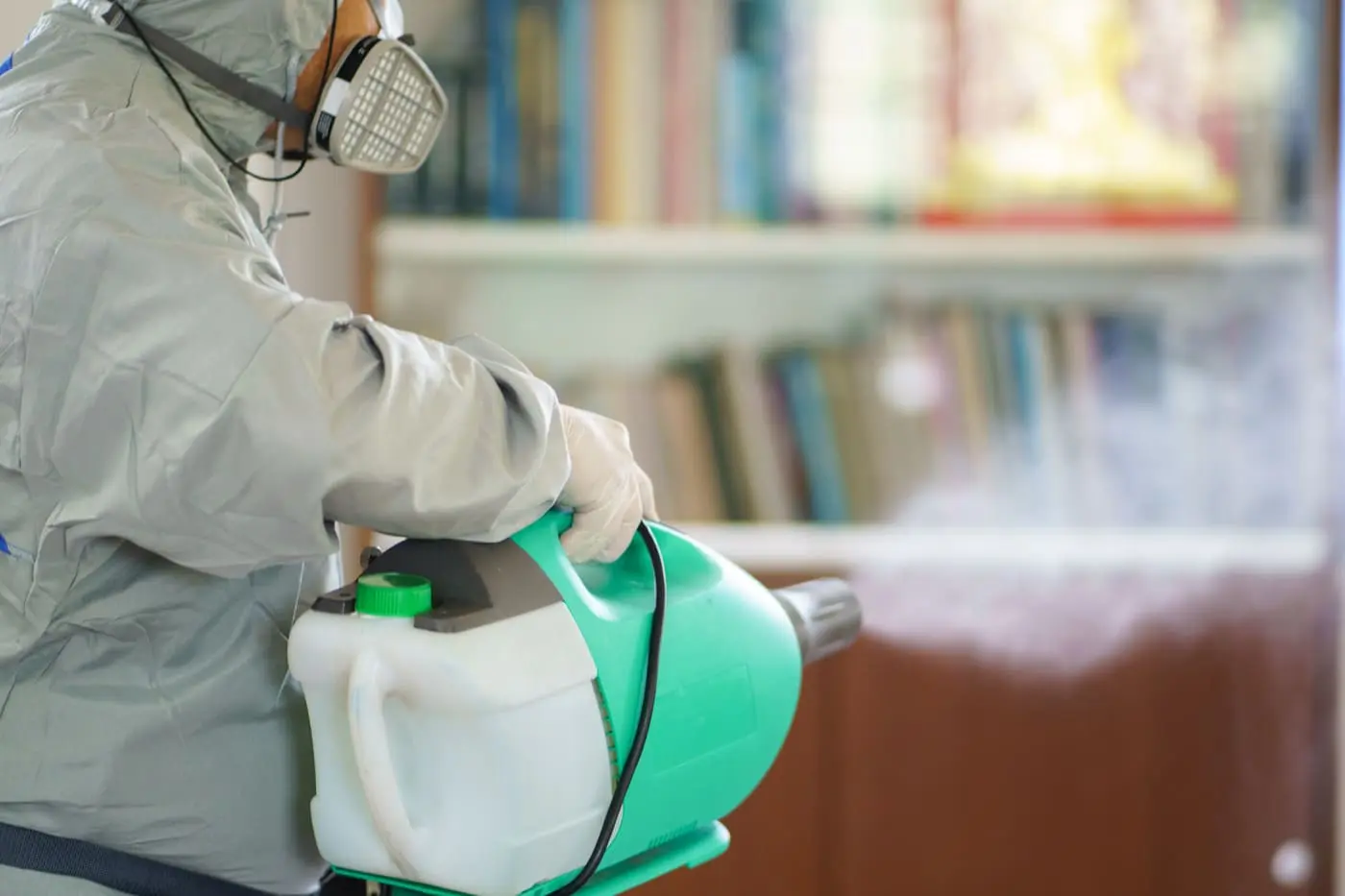
Electrostatic Spray Disinfection
Electrostatic spray disinfection is an advanced cleaning method used to ensure thorough and efficient sanitization of surfaces. This technique involves using a specialized sprayer to apply disinfectants in a fine mist that electrically charges the particles, allowing them to adhere uniformly to surfaces. Here’s a detailed guide on electrostatic spray disinfection:
How Electrostatic Spray Disinfection Works:
1. Electrostatic Charging: • The sprayer applies an electrical charge to the disinfectant solution as it is expelled. • Charged particles are attracted to surfaces, including hard-to-reach areas, ensuring even coverage. 2. Fine Mist Application: • The disinfectant is released as a fine mist, allowing it to coat surfaces uniformly without leaving large droplets. • This method reduces the amount of disinfectant needed and ensures efficient use of the product. 3. Adherence and Coverage: • The charged particles wrap around and adhere to surfaces, including edges and crevices. • This comprehensive coverage ensures that all areas are disinfected, reducing the risk of missed spots.
Benefits of Electrostatic Spray Disinfection:
1. Comprehensive Coverage: • Ensures thorough disinfection of complex and irregularly shaped surfaces. • Effective for large areas and hard-to-reach spots. 2. Efficiency and Speed: • Faster application compared to traditional cleaning methods. • Reduces the amount of time needed for disinfecting large spaces. 3. Reduced Chemical Use: • Optimizes the use of disinfectants, minimizing waste and potential chemical exposure. • Environmentally friendly due to lower chemical usage. 4. Enhanced Safety: • Reduces the likelihood of cross-contamination as the disinfectant is applied without physical contact. • Minimizes the risk of spreading pathogens during the cleaning process.
Applications of Electrostatic Spray Disinfection:
1. Healthcare Facilities: • Hospitals, clinics, and dental offices benefit from the thorough disinfection of patient rooms, operating theaters, and common areas. 2. Educational Institutions: • Schools and universities use this method to disinfect classrooms, cafeterias, gymnasiums, and other high-traffic areas. 3. Commercial Buildings: • Office buildings, retail stores, and hotels apply electrostatic disinfection to ensure a clean environment for employees and customers. 4. Transportation: • Public transportation systems, including buses, trains, and airplanes, use electrostatic sprayers to disinfect seats, handrails, and other frequently touched surfaces. 5. Food Service: • Restaurants and food processing facilities use this method to maintain hygiene standards in kitchens, dining areas, and food storage areas.
Best Practices for Electrostatic Spray Disinfection:
1. Selecting the Right Disinfectant: • Use EPA-approved disinfectants that are safe for electrostatic spraying and effective against a broad spectrum of pathogens. 2. Training and Safety: • Ensure staff are properly trained in using electrostatic sprayers, including understanding the equipment, disinfectant compatibility, and safety protocols. • Provide personal protective equipment (PPE) such as gloves, masks, and eye protection. 3. Regular Maintenance: • Maintain and clean the electrostatic sprayers according to the manufacturer’s instructions to ensure optimal performance. • Regularly check for clogs, leaks, and other issues. 4. Proper Ventilation: • Ensure adequate ventilation in the area being disinfected to allow for the safe dissipation of disinfectant particles. 5. Scheduling and Frequency: • Develop a disinfection schedule based on the usage and traffic of the area. • High-traffic and high-touch areas may require more frequent disinfection.
By integrating electrostatic spray disinfection into your cleaning protocol, you can achieve a higher level of cleanliness and hygiene, ensuring a safer environment for everyone in the facility.
